Professor Kuroda's teaching brings together rigorous theoretical frameworks and real-world policy experience. He draws on his work with international organizations, national governments, and field-based research to ground academic concepts in practical realities. He emphasizes interdisciplinary thinking and equips students to work at the interface of scholarship and policy.
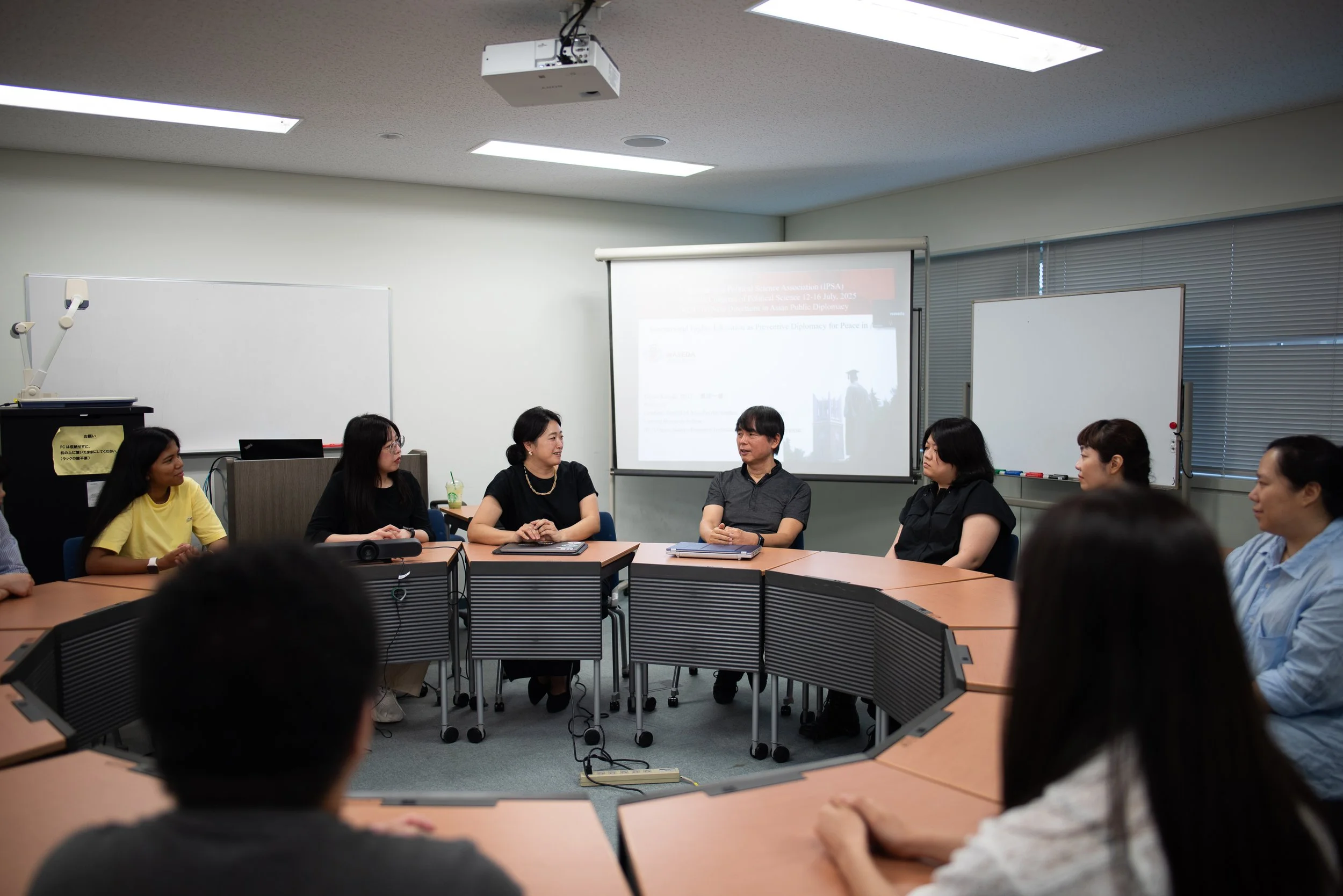
Courses Taught at GSAPS, Waseda University
International Education Policy in the Globalizing World Graduate seminar examining how global forces — from international organizations to regional agreements — shape national education policies, with particular attention to Asia.
Project Research Seminar (International and Comparative Education track) Thesis supervision seminar guiding students through original research design, data collection, and academic writing in the field of comparative and international education.
Additional graduate seminars in: educational development, global governance of education, higher education internationalization, and Japan's international education cooperation.
Graduate Supervision
Professor Kuroda welcomes applications from graduate students (Master's and Doctoral) interested in:
Education policy and international development
Comparative education in Asia
Inclusive education in developing countries
Globalization and higher education in Asia
Japan's international education cooperation
Education and peacebuilding
Prospective students are encouraged to review his publications and research project before applying, and to articulate how their proposed research aligns with his areas of expertise.
Research Seminar: International Education Policy in the Globalizing World
This project research seminar forms the intellectual core of my graduate supervision. Students engage with theoretical frameworks drawn from comparative education, sociology, political science, and economics, and apply them to empirical research on education systems in the Asia-Pacific region and beyond.
The seminar operates as a genuine research community. Students present their work-in-progress, engage in peer critique, and develop the skills of academic argumentation, writing, and presentation in an international context.
Seminar themes have included:
Education and international development in Southeast Asia and Sub-Saharan Africa — How education policy in post-conflict or low-income settings is shaped by international aid, donor conditionality, and local political dynamics.
Globalization and higher education in Asia — How universities in Japan, China, South Korea, and Southeast Asia are navigating internationalization pressures, student mobility, and global rankings.
Inclusive education in developing countries — Empirical studies of how countries such as Cambodia are building systems to support students with disabilities, and the role of teachers, families, and policy in this process.
Global governance of education — How multilateral organizations (UNESCO, the World Bank, UNICEF, bilateral aid agencies) design and implement global education frameworks such as Education for All and SDG4.
Japan's international education cooperation — Historical and contemporary analysis of Japan's role as a donor and partner in international education development, including the work of JICA and other agencies.
Education as preventive diplomacy — Emerging research on how cross-border educational exchange and cooperation can reduce conflict and build durable partnerships between countries.